If you have seen “batana oil” trending on social media and wondered whether it belongs in your product line, you are not alone. It is the first question most brand founders, salon owners and distributors ask us: what exactly is this oil?
Here is the short answer. Batana oil is the oil pressed from the kernels of the American oil palm, Elaeis oleifera, a palm that grows wild in the wetlands of La Mosquitia, Honduras. For generations, the Miskito people have made it by hand, over a wood fire, in small batches. The result is a dark brown, aromatic oil that is soft in warm weather and firm in cool weather, used traditionally on hair and skin.
This guide explains what batana oil is, where it comes from, how it differs from the palm oil you already know, and what a business buyer should understand before ordering a first gallon.
Where does batana oil come from?
Batana comes from one place above all others: La Mosquitia, in the department of Gracias a Dios, in northeastern Honduras. It is one of the largest remaining rainforest regions in Central America, a landscape of rivers, lagoons, savanna and swamp forest. There are almost no roads. Most travel happens by boat or small plane.
The American oil palm grows wild across these wetlands. The Miskito communities who live there, in particular the Tawira Miskito, have gathered its fruit and prepared the oil for generations. In Miskito tradition the oil is part of everyday hair care, and the Tawira are often described as “the people of beautiful hair.”
That remoteness is the reason batana has always been scarce. It cannot be grown on a plantation next to a factory and shipped by the container. Someone has to go into the rainforest, buy from the families who make it, and bring it out by river.
From the field. Our own trips to buy batana start with a long ride in a small wooden boat. When people ask us why authentic batana costs more than generic hair oils, we tell them about that boat ride. The oil travels a long way before it ever reaches a warehouse.
Batana oil vs palm oil: what is the difference?
This is the most common point of confusion, and it matters for your labels and your marketing.
| Batana oil | Common palm oil | |
|---|---|---|
| Species | Elaeis oleifera (American oil palm) | Elaeis guineensis (African oil palm) |
| Part of the plant | Kernel (the seed inside the fruit) | Fruit pulp (mesocarp) |
| Where it grows | Wild, in Central and South American wetlands | Large plantations, mostly in Southeast Asia and Africa |
| How it is made | By hand, small batches, over a wood fire | Industrial pressing and refining |
| Color and aroma | Dark brown, roasted and smoky | Orange-red when crude; pale and neutral when refined |
| INCI name | Elaeis Oleifera Kernel Oil | Elaeis Guineensis (Palm) Oil |
The two palms are related, but they are different species. Scientists who have compared them report that the kernels of Elaeis oleifera contain a higher share of unsaturated long-chain fatty acids than the kernels of the African palm. In plain terms: it is a different raw material, with a different story, and it should never be sold as interchangeable with generic palm kernel oil.
Is batana oil the same as ojon?
Mostly, yes. “Ojon” is another name for the same palm and its oil. Many buyers in North America first heard the word in the 2000s, when a Canadian hair care brand built a premium line around palm oil gathered by the Tawira of Honduras. Estée Lauder bought that company in 2007, and for a while “ojon” was the name people knew.
Today, “batana” is the word people type into search engines. If you sell to consumers, you will probably see both names. Your ingredient list, however, should use the INCI name: Elaeis Oleifera Kernel Oil. We explain the full story in is ojon oil the same as batana oil?
How is batana oil traditionally made?
Every community has its own small variations, but in broad terms the traditional process looks like this:
- Collection. Ripe fruit is gathered from wild palms, often reached by canoe.
- Opening the fruit. The fibrous outer layer is removed to reach the hard nut, and the nut is cracked by hand to free the kernel.
- Heating. Kernels are cooked over a wood fire. This step gives batana its dark color and its unmistakable roasted, smoky smell.
- Separating the oil. The oil is worked out of the kernels and separated using heat and water, then collected.
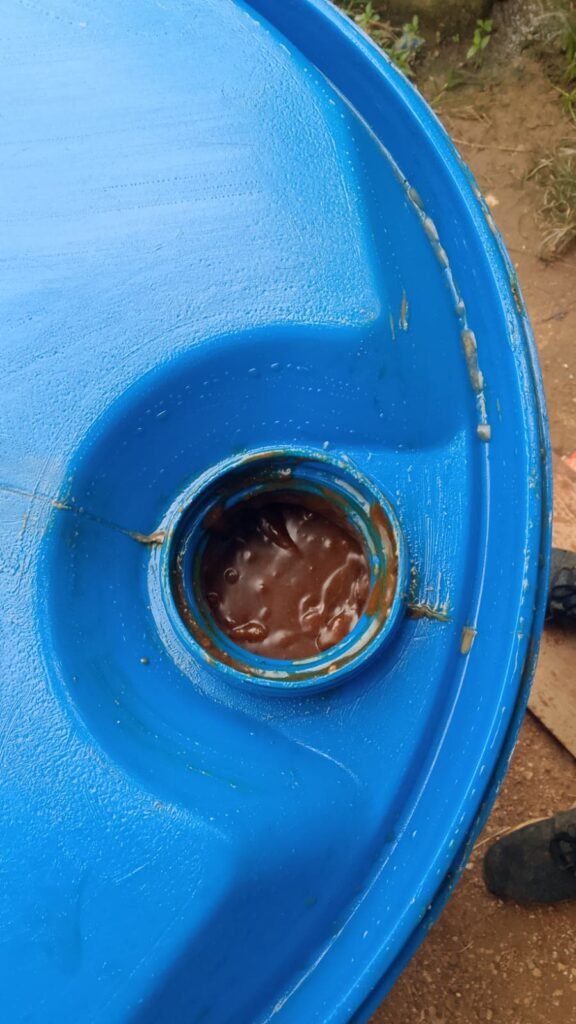
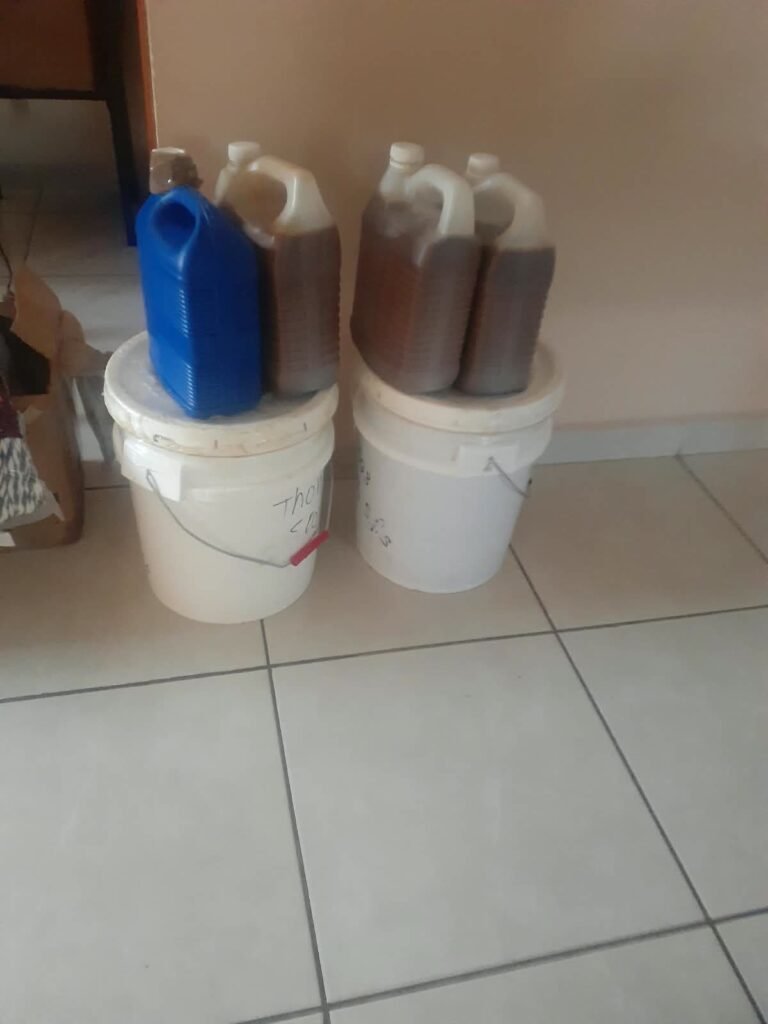
- Packing. For export, the oil is filled into sealed containers, buckets or drums.
Nothing is added. There is no bleaching, no deodorizing and no blending with other oils in the traditional method. It is slow, physical work, and a family can only make a limited amount, which is one more reason supply is tight.
What does real batana oil look, smell and feel like?
If you are evaluating a sample, these are the basics:
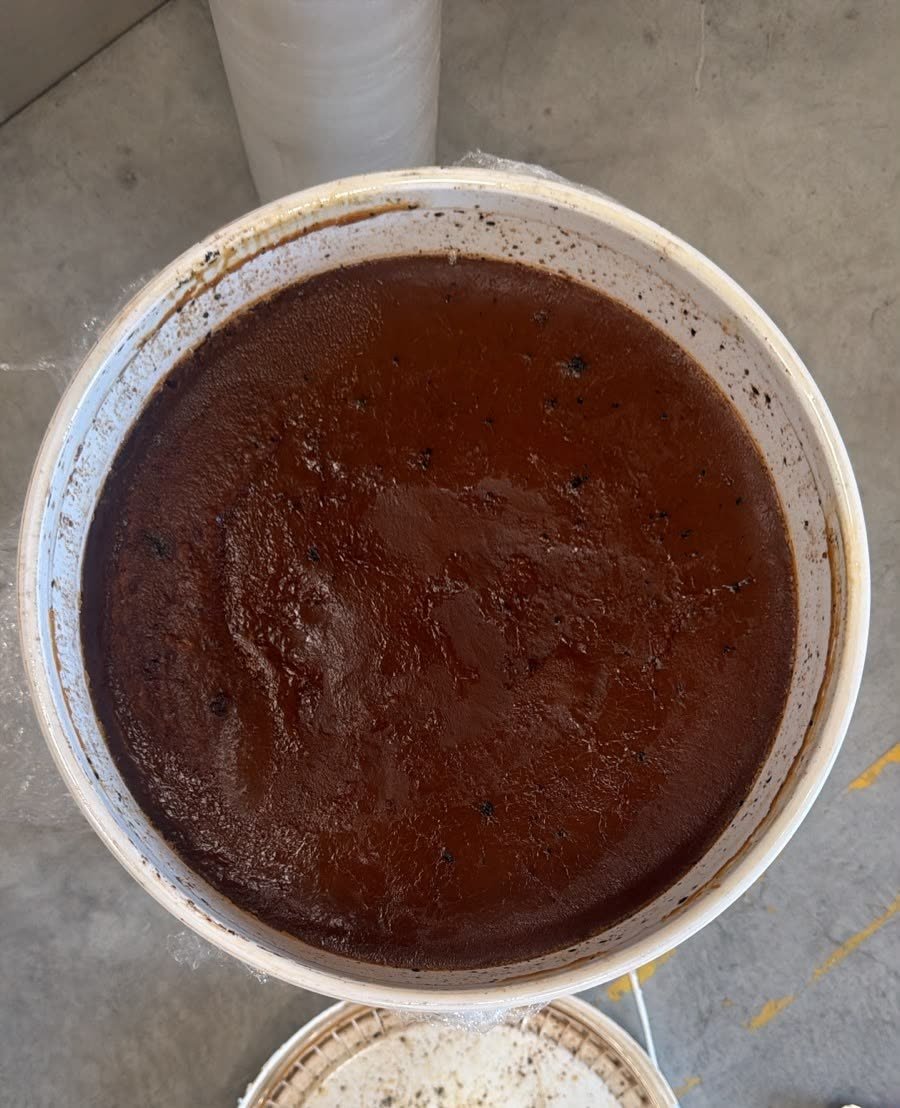
- Color: dark brown. The exact shade varies between batches, because it is made by hand over fire, not in a controlled refinery.
- Aroma: roasted, smoky, slightly nutty. Some people love it; some formulators choose to balance it with other ingredients.
- Texture: soft or even liquid in warm places and when exposed to heat; it firms up and can look solid in cool rooms. This is normal and does not mean the oil has gone bad.
A sample that is very light in color, has almost no smell, or stays perfectly liquid in a cold room deserves questions. It may be refined, or blended with cheaper oils. Our article on how to spot fake or diluted batana oil walks through nine practical checks.
Want to see and smell the real thing? We sell paid samples so you can test raw batana from La Mosquitia in your own formulation before you commit to a bulk order. Ask for a sample
How do brands and salons use batana oil?
Traditionally, batana is used on hair and skin as a conditioning oil. Commercially, we see buyers use it in a few main ways:
- Hair oils and pre-wash treatments, often blended with lighter carrier oils to adjust the texture and aroma.
- Hair butters, balms and pomades, where batana’s firm texture in cool temperatures is an advantage.
- Conditioners and masks, as a featured natural ingredient with a strong origin story.
- Salon treatments, where stylists use small quantities in hot-oil or conditioning services.
- Skin and beard products, such as balms and body butters.
A word about claims. Online, batana is often promoted with promises about hair growth. In the United States, the FDA treats claims that a product restores hair growth or stops hair loss as drug claims, which changes how the product is regulated. A serious brand describes cosmetic benefits (conditioning, shine, softness) and the traditional use in La Mosquitia, and leaves medical promises out. The claims on your finished product are your responsibility, so review them with your regulatory advisor.
Why is authentic batana oil limited and valuable?
Three things make real batana different from a commodity oil:
- One origin. Authentic batana comes from wild palms in a remote region, not from plantations.
- Hand production. Families make it in small batches with traditional methods.
- Hard logistics. It has to travel by river and road before it can be exported.
That is also why the market has filled up with products labeled “batana” that never saw La Mosquitia. Some are blends, some are refined, and some are other palm kernel oils with a new label. For a brand that tells customers its batana is authentic, the source is not a detail. It is the whole promise.
What should a business buyer ask a batana supplier?
Before your first order, get clear answers to these questions:
- What is the INCI name and botanical source on your documents?
- Where exactly is the oil made, and do you buy directly from the producers?
- Is it raw or refined? Has anything been added or removed?
- What packaging sizes do you offer, and what is the minimum order?
- What export documents come with each shipment?
- Can I buy a sample first?
For reference, here is how we answer them. Our oil is Elaeis Oleifera Kernel Oil, raw and unrefined, bought directly from Miskito producer communities in La Mosquitia. We pack it in sealed 1-gallon containers, 5-gallon buckets and 55-gallon barrels, with a minimum order of one gallon. Each export includes an invoice, a packing list and a phytosanitary certificate from Honduras. You can see the full product specs and available sizes on our main page.
How should batana oil be stored and handled?
Because batana changes texture with temperature, new buyers sometimes worry when a bucket arrives looking different from the last one. A few simple habits help:
- Keep containers sealed and stored in a cool, dry place, away from direct sun.
- Expect it to firm up in a cool warehouse and soften in summer. Both are normal.
- Warm it gently if you need it liquid for weighing or blending. A warm water bath works well. Avoid direct, intense heat, which can scorch the oil and change its aroma.
- Stir before sampling a large container, since natural oils can separate slightly as they cool.
- Use clean, dry tools. Water and dirty scoops are the most common causes of spoilage in any natural oil.
- Record the batch you used in each production run, so you can trace any difference in color or aroma back to a specific delivery.
If you plan to repack batana into smaller retail units, do it in a clean area and fill only what you need, rather than heating and cooling the whole drum again and again.
The bottom line
Batana oil is not a trend invented by social media. It is a traditional oil from a specific palm, a specific region and a specific people. For brands, salons and distributors, that is exactly its value: a natural ingredient with a real origin you can stand behind.
If you are just starting to explore batana, the next step is to understand where it comes from and how it reaches you. Read our story of how batana is made in La Mosquitia, and when you are ready, ask us for a sample.