The engine cuts out, and for a moment the only sound is water against the side of the boat. On both banks, the forest comes right down to the river. Somewhere behind those trees, wild palms are heavy with fruit. This is where real batana oil begins: not in a factory, but in La Mosquitia.
Authentic batana oil comes from La Mosquitia, a remote rainforest region in northeastern Honduras. It is made by Miskito families from the kernels of the American oil palm, Elaeis oleifera, which grows wild in the region’s wetlands. The oil is prepared by hand, over wood fires, in small batches, and then carried out by river and road to be exported.
If you are a brand, salon or distributor considering batana, understanding this journey will help you explain the ingredient to your own customers, price it correctly and avoid the many products that use the name without the origin.
What is La Mosquitia?
La Mosquitia, sometimes called the Moskitia, covers most of the department of Gracias a Dios, in the far northeast of Honduras, along the Caribbean coast and the border with Nicaragua. It is one of the largest remaining wilderness areas in Central America.
The landscape is a patchwork of:
- Rivers and lagoons, which serve as the main roads.
- Pine savannas and open grasslands.
- Swamp forests and wetlands, where the American oil palm grows wild.
- Dense tropical rainforest, including protected areas recognized internationally.
There is no highway connecting La Mosquitia to the rest of the country. People and goods move by boat, by small plane, and on the few dirt roads that exist. For anyone buying a product made there, logistics are part of the price.
Who are the Miskito people?
The Miskito are an Indigenous people of the Caribbean coast of Honduras and Nicaragua, with their own language and a long history in the region. Within La Mosquitia, the Tawira Miskito are especially associated with batana. They are often called “the people of beautiful hair,” and batana has a central place in their traditional hair care.
The knowledge of how to make batana is passed from generation to generation within families. It is not written in a manual. It lives in the hands of the people who make it: when the fruit is ready, how long to cook the kernels, how to separate the oil cleanly.
When you buy authentic batana, you are buying the result of that knowledge. Respecting it means paying fairly, telling the story accurately and never treating the producers as decoration for a label.
From the field. The people we buy from are producers and business partners. On our trips we pay families directly for their oil. That direct relationship is the core of what we do, and it is also what lets us answer, with confidence, the question every serious buyer asks: where did this oil really come from?
From palm to oil: how batana is made
Every community has small variations, but the traditional process follows the same logic.
1. Gathering the fruit
The American oil palm is shorter than its African cousin and often grows in flooded or swampy ground. Families travel by canoe or on foot to reach the palms and gather ripe fruit clusters.
2. Reaching the kernel
The fruit has a fibrous outer layer and a hard nut inside. The outer layer is removed, and the nuts are cracked, one by one, to free the kernels. This is slow, physical work.
3. Cooking over a wood fire
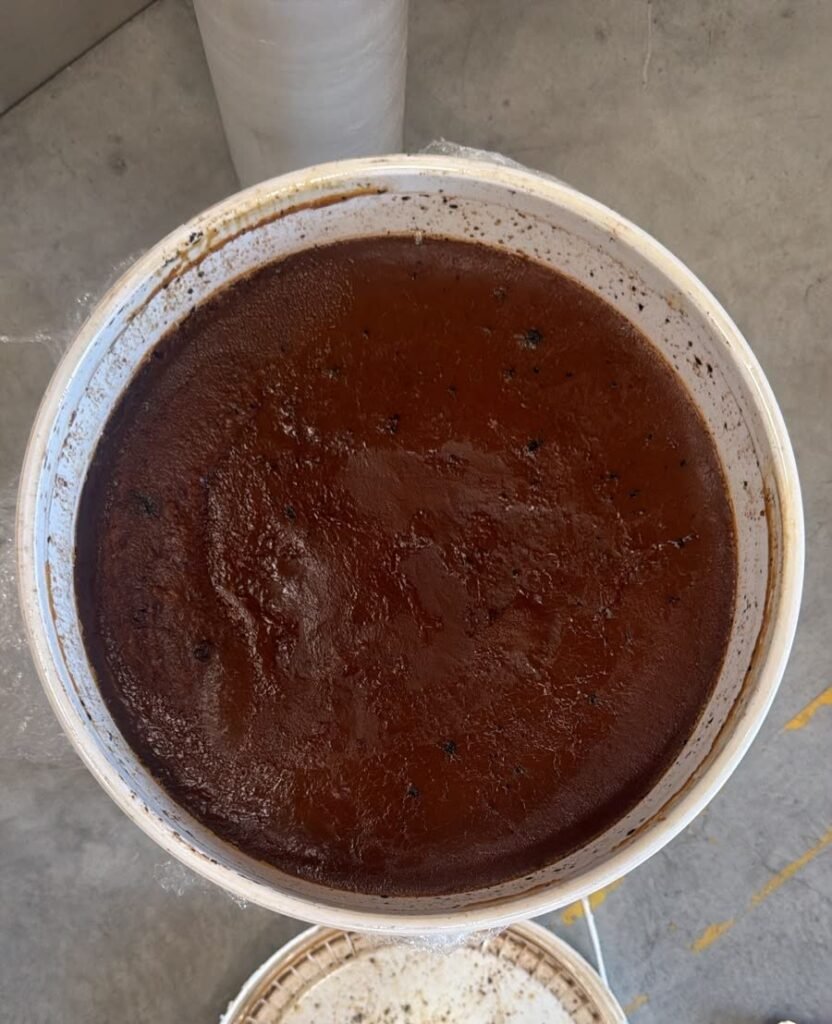
The kernels are cooked over a wood fire. This step is what gives batana its dark brown color and its roasted, smoky aroma, the signature of the traditional method.
4. Separating the oil
The oil is worked out of the kernels and separated with heat and water, then skimmed and collected. Nothing is added: no solvents, no bleaching agents, no fragrance.
5. Collecting and packing
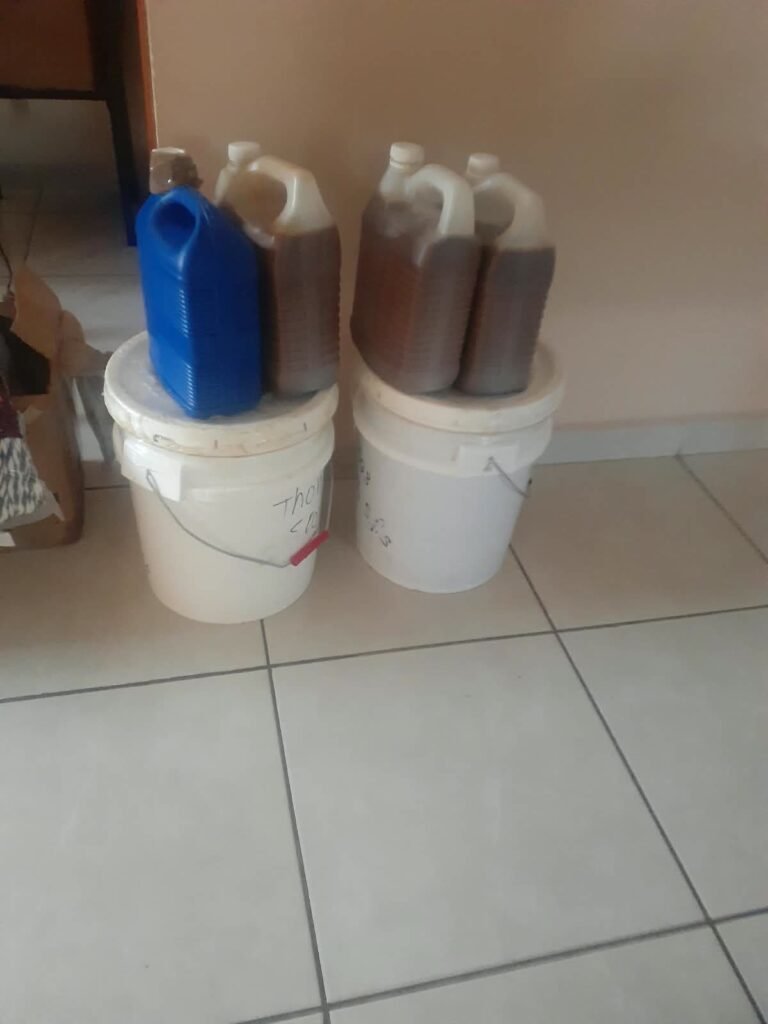
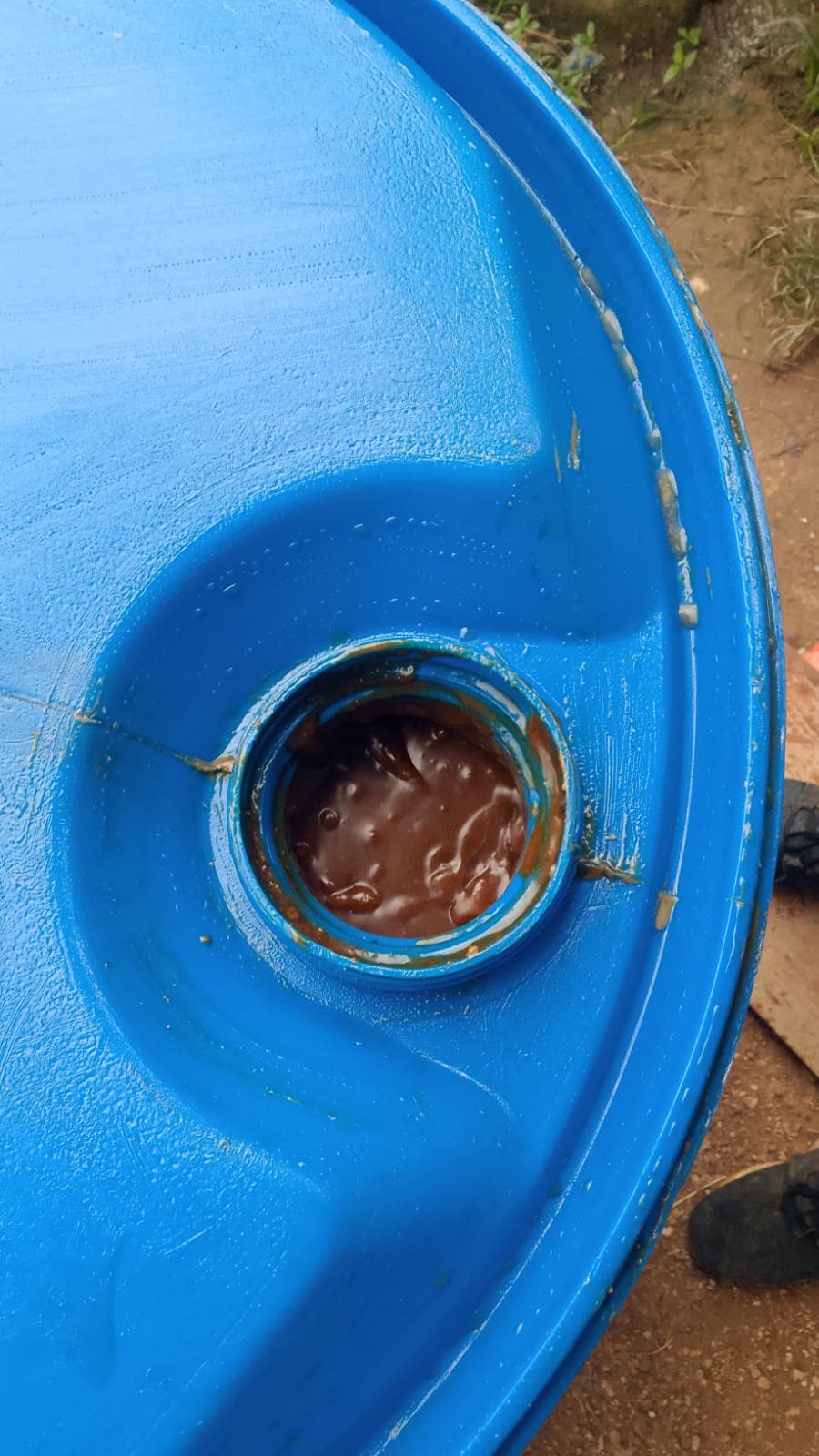
The finished oil is collected from producer families and brought together for export, where it is filled into sealed 1-gallon containers, 5-gallon buckets or 55-gallon drums.
Why can’t batana be mass-produced?
Buyers used to commodity oils sometimes ask why batana supply is limited and why lead times depend on quantity. The answer is in the process above:
| Factor | What it means for supply |
|---|---|
| Wild palms | There are no batana plantations feeding a factory. Fruit is gathered where it grows. |
| Hand processing | Each family can only make a limited amount per batch. |
| Remote location | Every drum travels by water and road before it reaches a port. |
| Natural variation | Color and aroma vary between batches, as they do in any handmade product. |
That is why we quote lead times of 7 to 20 days depending on quantity, and why we encourage buyers planning large production runs to talk to us early.
What do we look for when we buy at the source?
Buying directly does not mean buying blindly. When oil is collected from producer families, a few simple checks come first, and they are the same ones we recommend to our customers:
- Color. A deep, dark brown. Lighter or darker shades are normal between batches, but the oil should look like batana, not like a pale vegetable oil.
- Aroma. The roasted, smoky note of the wood fire. A neutral smell, or a smell of other oils, is a reason to stop and ask.
- Cleanliness. No water layer at the bottom, no visible debris, no unusual sediment. Clean oil keeps better.
- Containers. Clean, dry and sealable. The container is the first protection the oil has on its journey.
- Consistency of the story. Who made this oil, and where? With a direct relationship, that question has a simple answer.
These checks are not a laboratory analysis, and we do not pretend they are. They are the practical, hands-on quality control of people who handle the oil every day. If your business requires laboratory testing for your own formulations, a paid sample is the best way to start.
Why does batana look different from batch to batch?
New customers sometimes notice that the second bucket they receive is a shade lighter or darker than the first. That is expected. Batana is made by different families, over wood fires, with fruit gathered at different times. Small differences in cooking time and heat show up as small differences in color and aroma.
For a brand, this natural variation is part of the story, not a defect. If color consistency matters in a finished product, formulators usually handle it the same way they would with any natural ingredient: by recording batch numbers, testing each delivery and adjusting the blend if needed. A light, perfectly uniform oil, batch after batch, is in fact a reason to ask more questions.
How does batana travel from the rainforest to your door?
Here is the path, step by step:
- Purchase at the source. We buy oil directly from Miskito producer communities.
- Out of La Mosquitia. The oil travels by boat and road to where it can be packed and prepared for export.
- Packing. It is filled into sealed containers, buckets or drums. Buckets and drums are palletized and strapped for shipping.
- Export documents. Each shipment leaves Honduras with an invoice, a packing list and a phytosanitary certificate.
- Shipping. We ship worldwide under EXW, FOB or DAP terms, depending on what suits your business.
Because we are a company registered in Honduras, with a sister company registered in the United States, you deal with the same people from the rainforest to the invoice. There is no foreign reseller in the middle.
See the origin for yourself. Order a paid sample of raw batana from La Mosquitia and compare its color, aroma and texture with what you are using today. Ask for a sample
Why origin is your best quality control
The popularity of batana has created a problem: demand is far larger than what La Mosquitia can produce. The gap is filled by products that use the name but not the source. Some are blends with cheaper oils. Some are refined until the color and smell disappear. Some are other palm kernel oils with a new label.
For a buyer, a documented origin is the simplest and most powerful filter. Ask your supplier:
- Where exactly is the oil made? “Central America” is not an answer.
- Do you buy directly from the producers? Or from someone who bought it from someone else?
- Can you show me? Photos and video from the source, and documents that match the shipment.
- What does the oil look and smell like? Real batana is dark and roasted, not pale and neutral.
If you want to go deeper, our guide on how to spot fake or diluted batana oil gives you nine practical checks you can do with a sample.
Telling the origin story on your own label
For many of our customers, the origin is the reason they chose batana in the first place. If you plan to talk about La Mosquitia in your marketing, a few principles keep the story honest and strong:
- Be specific. “Made by Miskito communities in La Mosquitia, Honduras” is more credible than “exotic rainforest oil.”
- Describe the tradition, not miracles. Say that batana is used traditionally on hair in La Mosquitia. Avoid promises of hair growth or treatment of hair loss; in the United States, those are drug claims.
- Show real images. If your supplier can share genuine photos from the source, use them instead of stock jungle pictures.
- Do not exaggerate the impact. Say what you know. Buying direct supports producer families; you do not need to invent numbers.
- Keep the INCI name right. On your ingredient list, it is Elaeis Oleifera Kernel Oil.
The bottom line
Batana oil comes from a specific place, a specific palm and a specific people. That is not a marketing angle; it is the definition of the product. Every authentic drum carries the work of Miskito families and a long journey through one of the wildest regions in Central America.
If you are new to batana, start with our overview of what batana oil is. If you are ready to evaluate it in your own products, ask us for a sample, and you will see, smell and feel the difference an origin makes.